Case Study
Vietnam Tech Industry: The Honest 2026 Read
Vietnam's tech industry hit $148B revenue and 1.5M workers in 2024. Where FPT, VNG, and AI labs compete — and the gap to Singapore that 2026 must close.

TL;DR. Vietnam's tech industry generated approximately $148 billion in revenue in 2024 and employs over 1.5 million workers. The headlines are real but the segmentation matters. Vietnam wins decisively in IT services outsourcing, holds a strong position in fintech and consumer software, and lags meaningfully in product company maturity, design talent depth, and venture density. The semiconductor pivot is ambitious but the pipeline is immature. This piece walks through where Vietnam tech actually competes, where it does not yet, and how the country compares to Singapore, India, and Indonesia on specific sector slices.
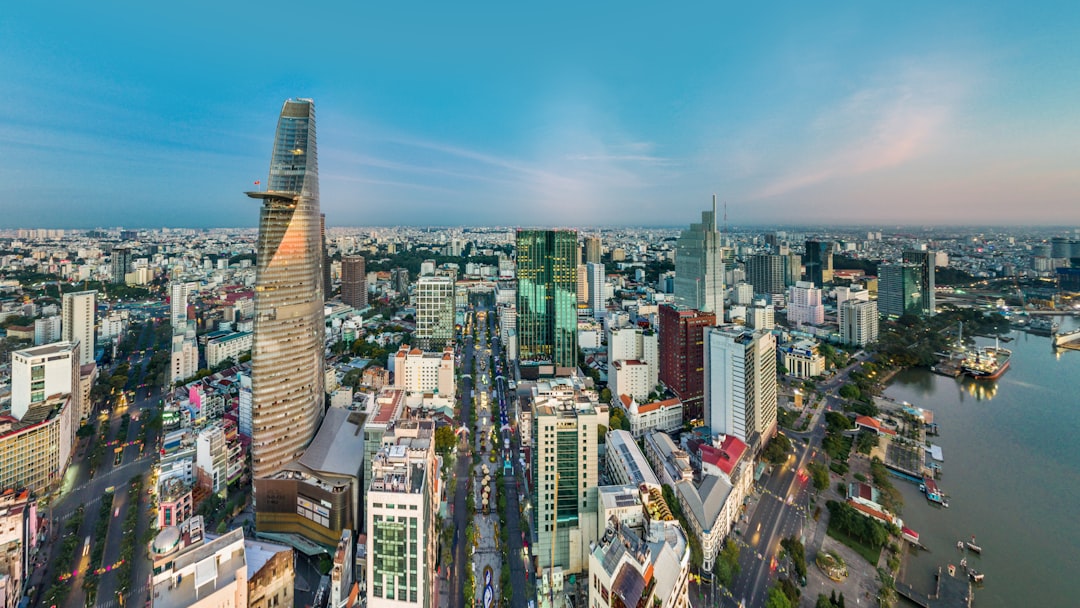
Photo by Peter Nguyen on Unsplash
What Vietnam's tech industry actually looks like in 2026
Vietnam's tech industry has grown faster than most regional peers over the past decade. ICT revenue reached approximately $148 billion in 2024. The IT services subsector alone exported over $5 billion to international clients. The workforce in software, hardware, and digital services now exceeds 1.5 million people. The Australian Trade Commission projected 8 percent annual growth from 2022 through 2026, a rate Vietnam has met or exceeded in most years.
The headline numbers are accurate but obscure structure. Vietnam's tech industry is not uniform. It is composed of distinct segments with different competitive positions, different growth dynamics, and different exposure to global tech cycles.
Reading the segments separately produces a clearer picture than the aggregate. Four categories matter most.
IT services and outsourcing. Vietnam's largest tech segment by employment. FPT Software is the anchor; the company became the first Vietnamese tech firm to exceed $1 billion in revenue from international IT services and now operates in over 30 countries with 1,500 AI specialists. Outsourcing covers application development, maintenance, testing, and increasingly AI-related services. The competitive position is strong: Vietnam offers India-quality engineering at 30 to 50 percent of the cost, with closer cultural and time-zone alignment to Northeast Asian clients than India offers.
Product and consumer software. Vietnamese product companies include VNG (gaming, $1B+ unicorn), Tiki (e-commerce), Base.vn (HR software), Misa (accounting software), Sky Mavis (gaming/blockchain), and a growing number of vertical SaaS companies. The product company segment is less mature than India's, with fewer companies achieving meaningful international revenue, but the domestic market has supported scale.
Fintech. Covered comprehensively in our vietnam fintech piece. Four unicorns (MoMo, VNPAY, VNLIFE, plus Tiki's financial arm), with insurtech as the fastest-growing subsegment. Fintech is now the most globally visible Vietnamese tech subsegment.
AI and emerging tech. VinAI Research is the most prominent Vietnamese AI institution, with research labs in Hanoi and Ho Chi Minh City. The AI talent pool in Vietnam is growing but smaller than in Singapore, India, or China. The country has stated a target of training 50,000 semiconductor engineers by 2030; the current pipeline is meaningful but immature.
The aggregate picture: a country competing strongly in IT services and fintech, scaling in consumer software, ambitious but early in semiconductors and frontier AI.
Where Vietnam actually wins
Three competitive advantages are durable rather than cyclical.
Engineering talent depth at price points global competitors cannot match. Vietnamese software engineers in 2026 cost approximately $30,000 to $80,000 annually for mid-to-senior roles in major cities. Equivalent roles in Singapore cost $80,000 to $200,000. The quality gap is narrower than the cost gap. For IT services, vertical SaaS, and AI businesses where engineering cost is the binding constraint, Vietnam has a structural advantage that does not erode.
Cultural and time-zone alignment with Northeast Asia. Vietnamese engineering teams work productively with Japanese, Korean, and Chinese clients. The cultural alignment is better than India offers, and the time zone overlap is closer. This advantage has produced FPT's Japanese and Korean client base and translates to similar advantages for SaaS companies selling into Northeast Asia.
Domestic fintech depth. The mature payments infrastructure, four fintech unicorns, and growing insurtech and embedded finance segments create a strong base for Vietnamese fintech companies to scale domestically before pursuing regional expansion. Few other regional markets have similar fintech depth at this stage.
The combination produces a competitive position that resembles India in some respects (engineering depth, IT services) but with stronger fintech infrastructure and weaker product company maturity. The Vietnamese position is structurally complementary to Singapore's (financial center, regulatory clarity, global capital) and competitive with Indonesia's (larger domestic market) on different axes.
Where Vietnam still lags
Equal honesty requires naming where the gaps remain meaningful.
Product company maturity. Vietnamese product companies are younger and smaller than Indian SaaS peers. Companies like Zoho, Freshworks, Postman, and BrowserStack have built global product businesses generating hundreds of millions in international revenue. Vietnam does not yet have product companies at that scale outside of fintech. The pattern is improving (VNG, Base.vn, Sky Mavis represent progress) but the gap is real.
Design and product management talent. The engineering talent depth does not extend evenly to product management and design. Senior product managers and designers in Vietnam are scarce relative to engineering availability. The gap constrains how quickly Vietnamese product companies can mature, particularly for product-led growth or consumer-facing software.
Venture capital density. The Vietnamese venture capital ecosystem is growing but smaller than Singapore's and Indonesia's. Most Series B and later rounds for Vietnamese companies still come from regional or global funds rather than domestic Vietnamese venture capital. Domestic VC depth is improving (covered in our venture capital vietnam piece) but remains a constraint on scale.
Frontier AI and semiconductor capability. The country has set ambitious goals but the actual pipeline of AI researchers and semiconductor engineers is still building. VinAI Research and the major universities are training the next generation, but the gap to Singapore (with its established research universities), Korea (with its semiconductor industry), and the United States (with global AI research) is meaningful and will take years to close.
The framing matters. These are gaps Vietnam is closing, not gaps that are widening. The trajectory is positive. The current state is honest: Vietnam is a strong regional tech competitor with meaningful gaps to fill before claiming global tier-one status.
Sector-by-sector comparison: Vietnam vs Singapore vs Indonesia
A clearer way to evaluate Vietnam's position is sector-by-sector against regional peers.
IT services outsourcing. Vietnam (FPT, TMA, Saigon Technology, etc.) is comparable in capability to India's tier-two outsourcers and meaningfully cheaper than Singapore (which is not cost-competitive for outsourcing). Indonesia is not a significant outsourcing competitor. Vietnam wins.
Fintech. Vietnam has produced four unicorns in fintech with strong domestic payments infrastructure. Singapore has more sophisticated wealth management and B2B fintech infrastructure but smaller consumer fintech depth. Indonesia has GoTo and several large fintech players with larger absolute scale but less profitable economics. Vietnam holds with Singapore on consumer fintech; Indonesia leads on scale.
B2B SaaS. Singapore has the deepest B2B SaaS ecosystem (Trax, ShopBack, Carousell, several Series C+ SaaS companies). Indonesia and Vietnam both trail Singapore here. Indian SaaS companies serve some of the regional demand. Vietnam lags Singapore meaningfully.
Gaming. Vietnam has VNG, Sky Mavis, and a strong indie gaming scene benefiting from low operational costs. Indonesia has fewer gaming successes at scale. Singapore has Razer but a smaller game development ecosystem. Vietnam leads in Southeast Asia on gaming.
E-commerce platform. Indonesia leads decisively with GoTo (Tokopedia) and the broader marketplace ecosystem. Vietnam has Tiki, Sendo, and Shopee Vietnam but Shopee is regional, not Vietnamese-owned. Singapore is small for marketplace. Indonesia wins.
AI research and frontier capability. Singapore leads through NUS, NTU, and A*STAR research output. Vietnam has VinAI and growing university programs but trails meaningfully. Indonesia trails both. Singapore leads.
Hardware and semiconductors. Vietnam is the leading foreign-direct-investment recipient for electronics assembly (covered in our fdi in vietnam piece). Singapore has higher-value semiconductor R&D but smaller assembly base. Indonesia has limited hardware industry. Vietnam leads on assembly volume; Singapore leads on R&D depth.
The sector-level breakdown shows a country with clear strengths (IT services, fintech, gaming, hardware assembly), competitive positions (consumer fintech vs Singapore), and meaningful gaps (B2B SaaS, AI research, e-commerce platform leadership).

Photo by Mohammad Rahmani on Unsplash
The semiconductor pivot honestly assessed
The most strategic and uncertain element of Vietnam's tech industry trajectory is the semiconductor pivot.
The government has set a target of training 50,000 semiconductor engineers by 2030. Major Vietnamese universities have launched chip-design programs. Intel has continued to expand its assembly and test operations in Ho Chi Minh City. NVIDIA has signed agreements with Vietnamese partners around AI infrastructure. Samsung has invested in next-generation manufacturing facilities. The political and industrial commitments are real.
The execution reality is more modest. The current pipeline of Vietnamese semiconductor engineers is in the low thousands, not the tens of thousands the 2030 target implies. The country has limited front-end fabrication (the high-value design and manufacturing layer); current activity is concentrated in assembly, test, and packaging (the back-end, lower-margin layer). Closing the gap to genuine semiconductor capability requires either fifteen-plus years of sustained development (the South Korea or Taiwan path, which both countries took 25+ years to walk) or anchor investment from a major front-end semiconductor firm willing to build in Vietnam, which has not yet been committed at scale.
The honest read is that Vietnam will continue to grow as an electronics and semiconductor assembly location. Moving up the value chain to design and front-end manufacturing is plausible over 15+ years but unlikely to land in the 2026 to 2030 timeframe at the scale the 2030 target implies.
This does not undermine the trajectory. It clarifies the timeline.
What this means for founders, investors, and operators
For Vietnamese founders, the implication is that the country's tech advantages are real but uneven. The strongest founder opportunities sit where Vietnam's advantages are durable: fintech for the domestic market, vertical SaaS for Vietnamese SMEs, AI-native vertical software for Vietnamese-language verticals, and IT services and consulting for international clients. The OS Research companion read on vietnam investment opportunities walks through the asymmetric founder opportunities.
For foreign investors, the implication is that Vietnamese tech offers strong sector-specific opportunities but should not be treated as a uniform "tech market" bet. The fintech opportunity is structurally different from the AI research opportunity is structurally different from the gaming opportunity. Sector-by-sector underwriting produces sharper conviction than country-level allocation.
For operators considering Vietnam, the country offers high-quality engineering at competitive prices, a maturing fintech ecosystem to partner with or sell into, and growing AI capability for cost-competitive AI development. The gaps in design, product management, and frontier research mean these specific functions may still need to be sourced from Singapore, India, or Western markets in the near term.
What investors should watch
For investors tracking the Vietnamese tech industry in 2026, three signals matter more than the headline ICT revenue growth.
Foreign-currency revenue mix. Vietnamese tech companies that earn meaningful revenue in USD, JPY, or EUR (through international clients) are less exposed to domestic currency volatility and more strategically valuable than purely domestic-revenue tech companies. The mix is a leading indicator of which companies will scale internationally.
Product company unit economics. As Vietnamese product companies mature, the question is whether they reach SaaS-grade unit economics (60+ percent gross margins, net dollar retention above 100, CAC payback under 18 months). The first wave of Vietnamese product companies is just reaching this benchmark; the second wave will determine whether Vietnam produces tier-one product companies at scale.
Semiconductor pipeline progress. The trajectory of Vietnamese semiconductor engineer training, anchor investment commitments, and first-mover front-end facility construction will determine whether the semiconductor pivot is a 15-year story or a stalled ambition. Watching the pipeline produces leading information.
Frequently asked questions
Q: How big is Vietnam's tech industry?
A: Approximately $148 billion in ICT revenue in 2024, with over 1.5 million workers across software, hardware, and digital services. IT services exports alone exceeded $5 billion. The Australian Trade Commission projects continued growth of around 8 percent annually through 2026, and the country has met or exceeded that pace in most years.
Q: What are the largest tech companies in Vietnam?
A: FPT Corporation (parent of FPT Software), VNG (gaming and consumer), MoMo (fintech), VNPAY (fintech), Tiki (e-commerce), Viettel (telecom and tech services), VinAI (AI research), Sky Mavis (gaming/blockchain), and Misa (accounting software) are the most prominent. FPT is the largest by international revenue; VNG is the largest Vietnamese-headquartered product company.
Q: Is Vietnam good for software development?
A: Yes, particularly for outsourced IT services, vertical SaaS, and AI businesses where engineering cost is the binding constraint. Engineering talent depth is strong, cost competitiveness is high, and cultural alignment with Northeast Asian clients is better than India offers. The gaps are in product management, design, and frontier AI research.
Q: What is Vietnam's role in global tech?
A: Currently, Vietnam is a leading IT services outsourcing destination, a strong electronics manufacturing location, and a maturing fintech market. The country aims to become a meaningful semiconductor industry over the next 15 to 20 years. Globally significant in IT services and electronics assembly; emerging in fintech and AI; aspirational in semiconductors and frontier research.
Q: What sectors of Vietnam tech are growing fastest?
A: Fintech (particularly insurtech, with 27 percent CAGR projected through 2030), AI-related services (rapid growth from a small base), and vertical SaaS for Vietnamese SMEs. Gaming continues to grow but at a slower rate. Semiconductor assembly is expanding but moving toward higher-value front-end work is the longer-term goal.
Q: How does Vietnam tech compare to India?
A: Vietnam has cost advantages over India (30 to 50 percent cheaper engineering) and stronger time-zone alignment with Northeast Asia. India has deeper venture capital, more mature product companies, and a much larger domestic market. The two countries are partly complementary, partly competitive, and Vietnam's trajectory will likely close some but not all of the gap over the next decade.
Q: What is FPT Software, and why does it matter?
A: FPT Software is Vietnam's largest IT services company and the first Vietnamese tech firm to exceed $1 billion in international IT services revenue. The company operates in over 30 countries with 1,500 AI specialists across 10 key industries. FPT matters because it demonstrates that a Vietnamese tech company can compete globally in IT services, validating the broader country thesis.
Q: What is VinAI, and what is its role?
A: VinAI is a Vietnamese AI research organization based in Hanoi and Ho Chi Minh City. The institute focuses on key AI technologies including natural language processing, computer vision, and applied machine learning. VinAI represents Vietnam's most prominent AI research effort and the country's bid to develop frontier AI capability rather than just applying foundation models from elsewhere.
Q: Will Vietnam become a semiconductor hub?
A: Vietnam is already a major semiconductor assembly and test location. Moving up the value chain to front-end design and manufacturing is the ambitious 2030 goal. The current pipeline of Vietnamese semiconductor engineers is in the low thousands; the 2030 target is 50,000. Closing the gap is plausible over 15+ years; landing it in the 2026 to 2030 timeframe at full scale is unlikely. The trajectory is positive; the timeline is longer than headlines suggest.
Q: How is Vietnam tech different from Singapore tech?
A: Singapore has financial-center infrastructure, mature B2B SaaS, sophisticated AI research, and global capital access. Vietnam has engineering depth at lower cost, deeper consumer fintech, stronger gaming, and a much larger domestic market. The two ecosystems are complementary: Singapore for headquarters and regional capital; Vietnam for engineering and consumer market depth. Many regional companies operate across both.
Q: Should foreign companies set up tech operations in Vietnam?
A: For engineering-intensive operations where cost is the binding constraint, yes. For product management, design, and frontier research roles, the talent pool is thinner and may need to be supplemented. The starting a business in vietnam as a foreigner piece covers the operational setup considerations.