Playbook
The Business Model Canvas: Test Your Startup on One Page
Business plans don't get read. Canvases do. The Business Model Canvas turns nine boxes into a testable map of your whole business.
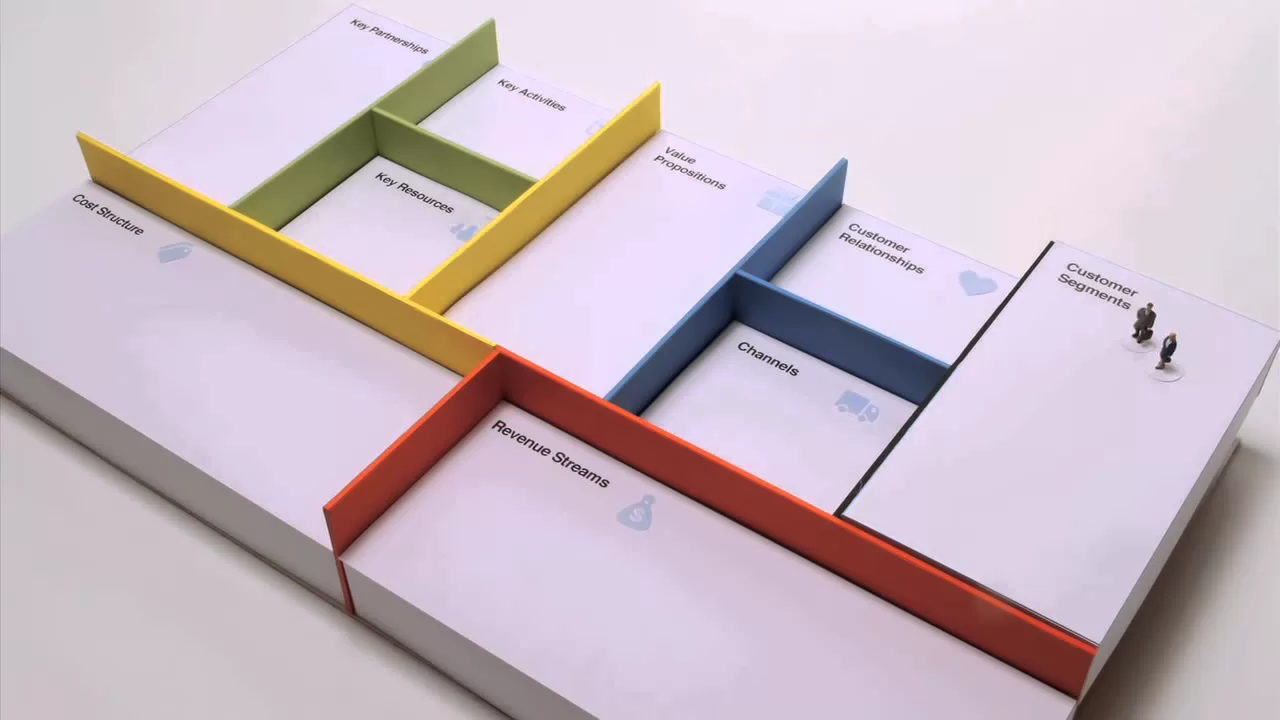
Rule at OS Research: before any idea gets a testing budget, it gets a Business Model Canvas. Not a deck. Not a doc. One page, nine boxes, filled in as honestly as the team can at that stage.
Reason: a specific failure mode we've watched too many times. A founder falls in love with a value proposition, starts building, and spends a year on the product before realizing they never figured out who would pay, how it would reach customers at scale, or what the business actually costs to run.
The Business Model Canvas (Alex Osterwalder) forces that conversation up front. Not to lock answers in. Early answers are mostly wrong. The point is to put assumptions into a shape where the team can rank them by risk and decide what to test first.
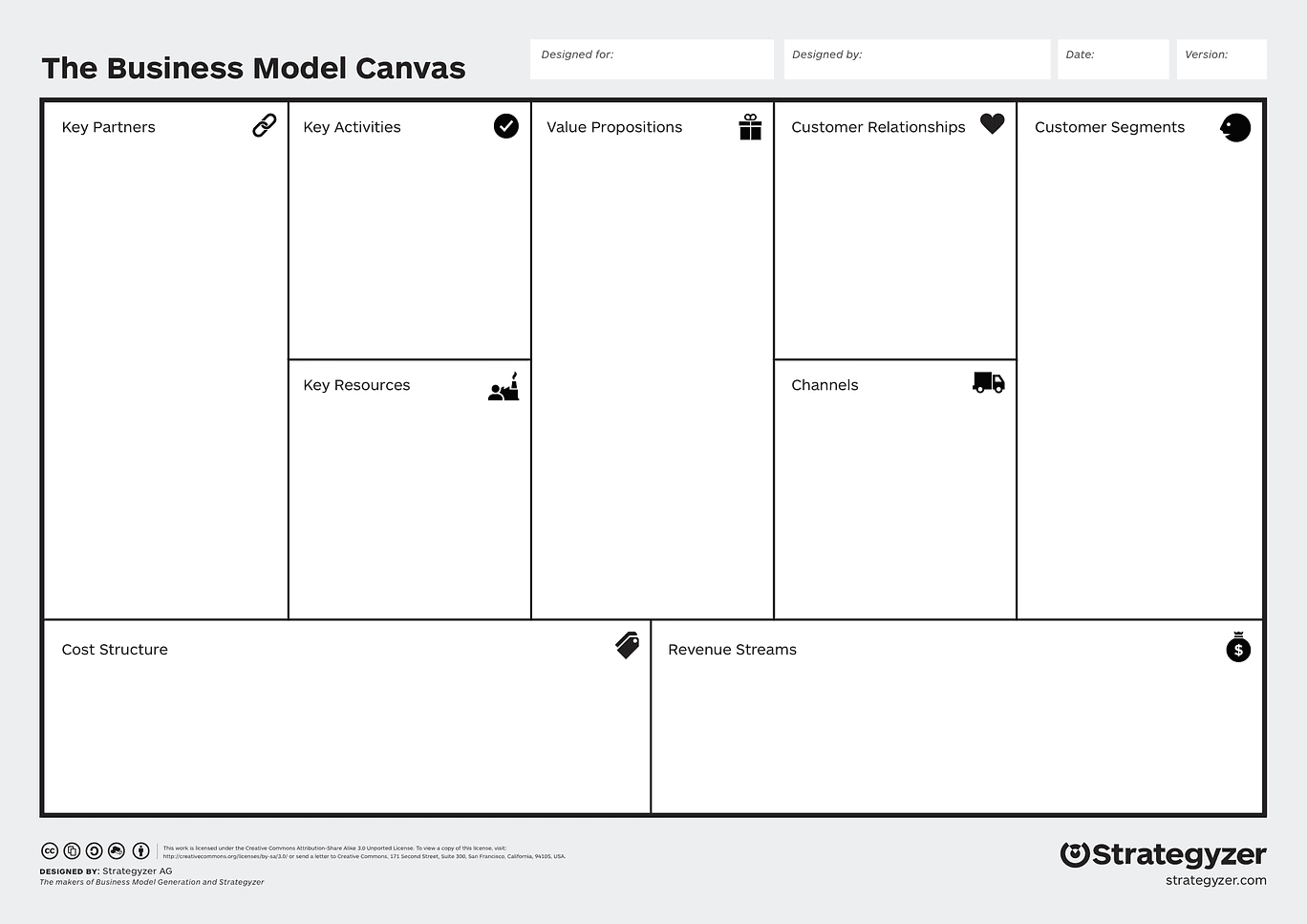
Nine boxes, one business
Customer Segments
Who the business creates value for. Two subtleties: users and payers aren't always the same person (a kids' education product has a child user and a parent payer); and "urban Vietnamese professionals" isn't a segment. "Hanoi-based mothers aged 28 to 38 managing a household of four on a dual-income budget" is.
Value Propositions
The bundle of products and services for each segment. The VPC zooms in on this box.
Channels
Touchpoints. Paid ads. Retail. Word of mouth. App stores. Most business models live or die here, and most founders under-think it. A brilliant product with no reliable way to reach customers is a hobby.
Customer Relationships
Self-service, concierge, community-driven, automated. Often treated as secondary. Shouldn't be. It shapes cost, loyalty, brand, and support burden.
Revenue Streams
How and at what price the business captures value. One-time, subscription, transaction fee, ads, licensing, freemium, usage-based. More creative than it first appears. Many blue oceans come from picking a revenue model the category isn't using.
Key Resources
What the business can't operate without. Physical, intellectual (brand, data, IP), human (specific talent), financial. Name the one or two that are actually load-bearing — not everything you happen to own.
Key Activities
What you have to do well. SaaS = software + customer success. Marketplace = matching + trust. Everything outside is outsourceable, automatable, or optional.
Key Partnerships
Who helps you leverage the model. Strategic, tactical, or load-bearing. Name the risk.
Cost Structure
Falls out of the others. Once activities, resources, and partnerships are clear, costs are largely determined. Interesting questions: fixed vs. variable, where the economies of scale are, what unit economics look like at 100 / 10,000 / 1,000,000 customers.
The left, the right, the middle
Right side = customer. Value Prop, Segments, Channels, Relationships, Revenue. Who do we serve, what do we offer, how do we reach, how do we get paid.
Left side = infrastructure. Activities, Resources, Partners, Costs. What it takes to deliver, what it costs.
Middle = Value Proposition. The bridge. If the left can't profitably deliver what the right promises, there's no business. Just a wish.
Most founder conversations are right-side-heavy because that's the fun part. Business models break on the left. We force the left into every pitch.
Worked example
A platform helping Vietnamese homeowners manage their own renovations (Everyday Life sector).
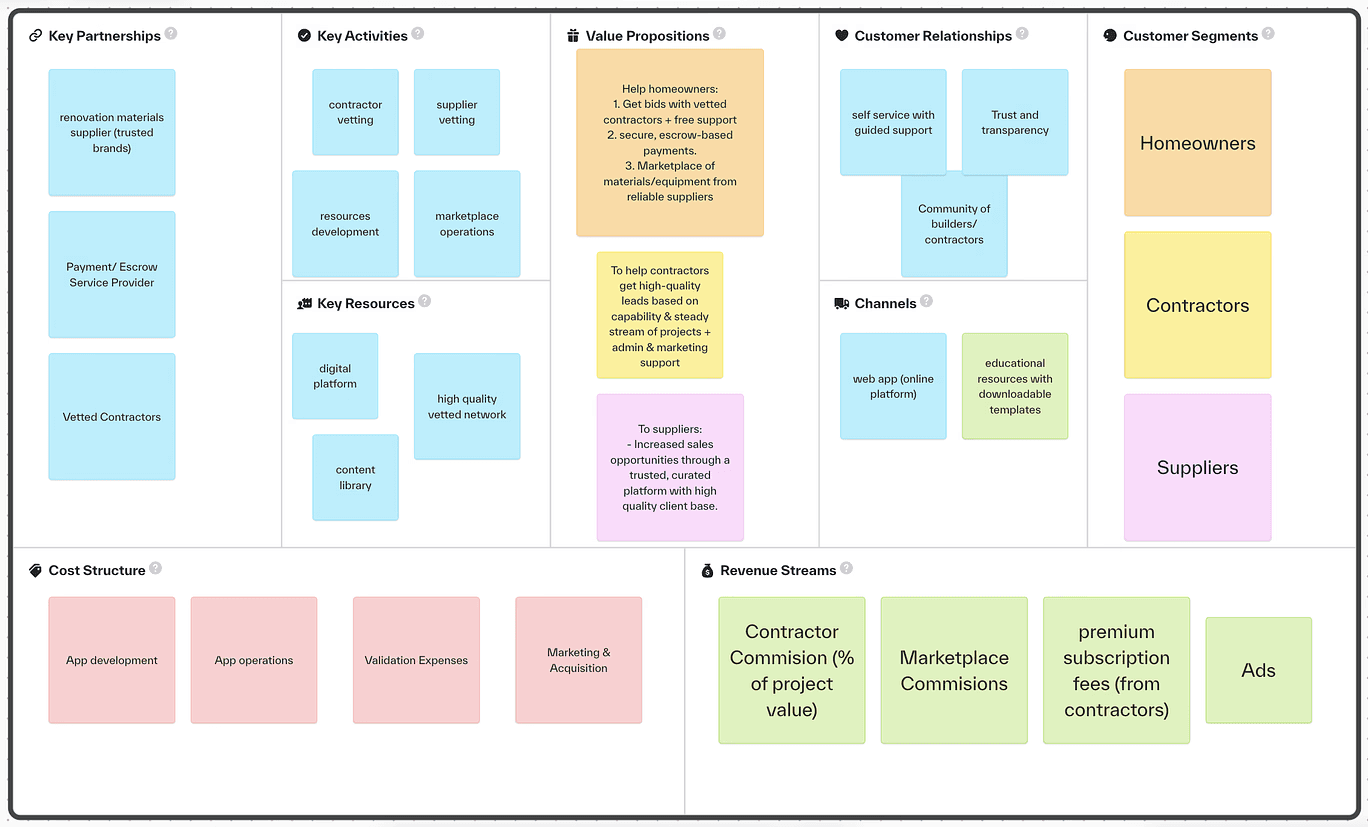
Every line is a hypothesis, not a fact. The team hasn't talked to a single homeowner yet. That's the point. Every assumption sits in a named box, ranked by risk, ready to test.
How BMC moves through an OS Research project
Shaping. CEO and strategist draft v1 alongside the VPC. Part of the First Business Pitch.
Testing. Extract riskiest assumptions, turn into hypotheses, send into experiments. Cycle one usually tests Segments and Value Prop. If they collapse, nothing else matters.
Between cycles. Update the canvas, version up. Old versions archived (not deleted), they document what we got wrong.
By graduation, v5 or v6. If the canvas never changed, we weren't learning.
The most useful thing about it
It fits on one page.
Everything above could be a thirty-page business plan. Business plans don't get read or updated. Canvases do. New teammate? Print it, hand it over. They understand the whole business in ten minutes.
The canvas doesn't guarantee a good business. It guarantees the team is arguing about the same business, with the same definitions, in the same place.
← Previous: The Value Proposition Canvas
→ Next: Forget the Pitch Deck
🏠 Series hub: Inside a Startup Validation Studio