Playbook
Forget the Pitch Deck. Write This One-Page Brief Instead.
Pitch decks impress investors but don't shape ideas. The First Business Pitch is a one-page brief that turns a fuzzy idea into a testable bet.
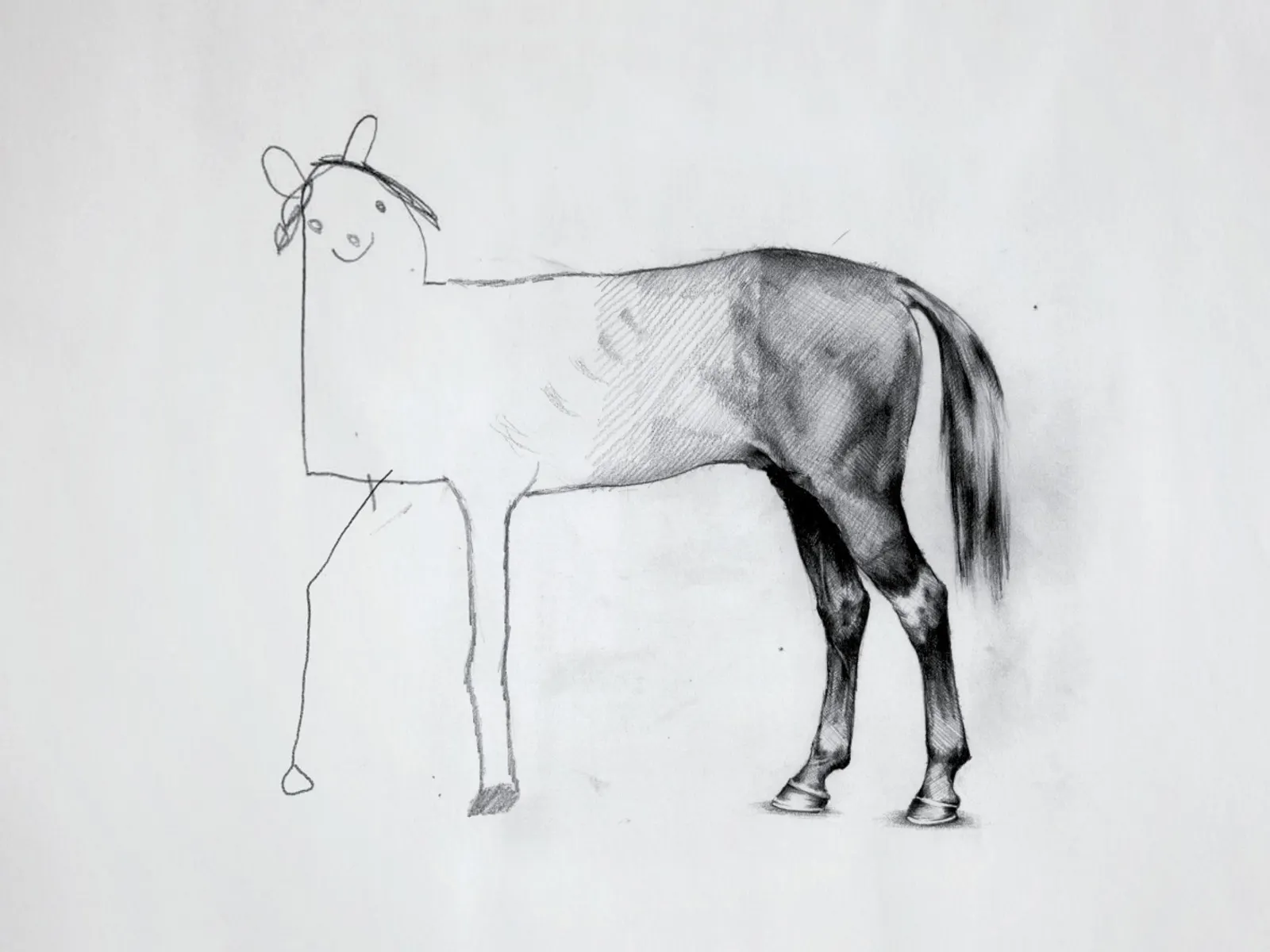
An idea walks into the studio. A founder, a teammate, or an outside collaborator has looked at one of our three sectors and noticed something that might be worth a company.
At most places, the next step is a pitch deck. At OS Research, it's a one-page document called the First Business Pitch. Not a deck. A shaping brief that forces the idea into a form we can test, before we spend a single week validating.
This is where the VPC and BMC stop being diagrams and start being a plan of attack.
What the Pitch is doing
A raw idea is too fuzzy to test. A feeling plus a fragment of a solution plus a guess about the market. Sent into a testing cycle, it collapses under its own vagueness. Which customer? Which pain? What counts as yes or no?
The Pitch answers those before testing starts. Bounds the scope, names the assumptions, picks the riskiest to go first. It's the bridge between strategy and tactics.
Two non-negotiables:
Version one is written from intuition and desk research. We're not looking for perfect. We're looking for specific, so the team can disagree productively and test honestly.
The Pitch is never final. Every cycle of evidence updates the version. By graduation, v5 or v6, barely resembling v1. That's how we know validation did something.
Where the format comes from
Borrowed from Shape Up, the method built by 37signals. Counterintuitive idea: instead of estimating how long a piece of work will take, decide how much time it's worth. Fix the time, flex the scope.
This inverts the project conversation. Instead of "how long will it take to build everything we want," it becomes "given six weeks, what's the smartest thing we can learn." We fix the time and treat any idea that can't be shaped into a fixed window as a sign we don't understand the problem yet.
The five ingredients
Same order on every Pitch. Skipping ahead is how teams test the wrong thing.
1. Problem
Not the category. The specific situation a specific person is stuck in.
Biggest mistake: writing it at too high a level. "Education in Vietnam is broken" is a slogan, not a problem. A problem statement has a person, a job, and a failure:
"Parents of children 6 to 12 in District 2 spend hours a week searching Zalo groups for tutors, can't verify quality, and end up paying premium prices at centers they don't trust."
The first version has guesses. They just need to be specific enough to be wrong in a particular way. We push for at least one concrete story: one cousin, one neighbor, the team's own experience.
2. Desk Research
Ground the Pitch is standing on. AI-assisted search. Social listening on Reddit, Facebook groups, TikTok comments. Search trends. Rough market size. Scan of what exists and where it falls short.
Discipline here is humility. Desk research is context, not evidence. It tells us the problem is plausible. It doesn't tell us anyone will pay.
3. Appetite
The Shape Up core. Our answer to: if we only care enough to spend six weeks on this, what does the solution look like?
A creative constraint. Easy to suggest a complicated, expensive solution. Hard to suggest a simple one that fits a small window and still teaches us.
Appetite has a second part teams forget: what we're not doing. Features deferred. Segments ignored. Use cases refused in this version. Without writing the no-gos down, scope creeps and the cycle becomes something else.
4. Solution Sketch
The rough shape inside the appetite. In almost every case, the Sketch is two artifacts: a VPC and a BMC, both v1, both mostly wrong.
We don't design full products at this stage. The Sketch is the minimum solution concept needed to design an experiment against. Over-designing is a common failure mode.
5. Critical Assumptions
The riskiest part of the document. Every Pitch lists what must be true for the idea to work, then answers two questions: which hypotheses are most important, and which have no real evidence yet?
Together, those two questions find the experiments that matter. We sort across four axes from Strategyzer:
Desirability: do customers want it?
Feasibility: can we build and deliver it?
Viability: can we do it profitably?
Adaptability: is it the right time?
The four force us beyond the customer question (which most founders obsess about) into the business model questions.
What it feels like
First time drafting one, it feels uncomfortable. Document is short. Appetite seems small. Assumptions seem obvious. The team wants to add more, make it sound bigger.
Resist. Shortness is the point. By the end, the Pitch should look like a thing the whole team agrees to disagree about productively. Those disagreements are the experiment list for cycle one.
From Pitch to cycle
Pitch signed off → six-week cycle starts. Critical Assumptions become Test Cards. Test Cards get owners and deadlines. Team goes into the field. Six weeks later, evidence comes back, Learning Cards get written, the Pitch updates.
Strong evidence → next cycle. Thin or negative → kill, park, or reshape. Every outcome is a result. Nothing is wasted.
An idea is not a truth. It is a claim. Bounded, written, owned. Now we go test it.
← Previous: The Business Model Canvas
→ Next: The Six-Week Testing Cycle
🏠 Series hub: Inside a Startup Validation Studio